
Goth vs Deathrock Fashion: Key Differences Explained
Last Updated: November 13, 2026
Quick Summary
Goth vs deathrock fashion both dress in black and grew out of punk, but goth leans romantic and theatrical while deathrock stays gritty, torn and horror-led. Goth borrows from Victorian mourning dress and glam rock, whereas deathrock keeps the punk cut with ripped fishnets, band shirts and a deathhawk.
- Goth rock grew in the late 1970s and early 1980s with British bands; deathrock formed in the same era on the American west coast.
- The deathhawk, with shaved sides and a spiked centre strip, is the single clearest signal of deathrock styling.
- When mixing styles, pick one as the base and add no more than two pieces from the other side.
- One torn piece per outfit reads as intentional; three reads as a fancy-dress attempt.
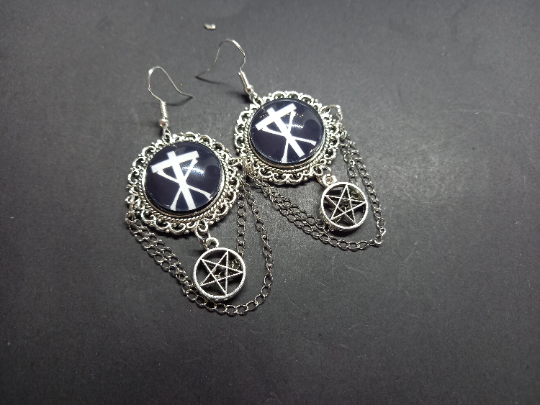
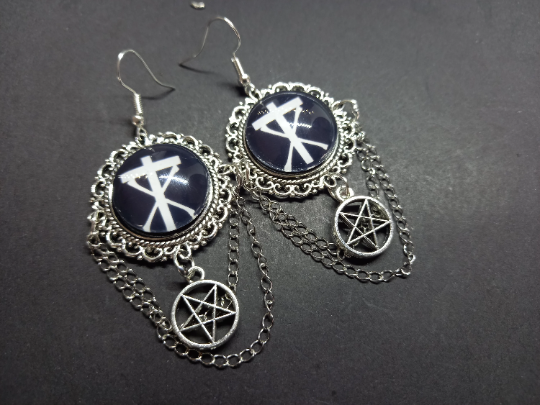
- The Rozz Williams Christian Death-inspired deluxe earrings cost £12.50 and ship within three working days by Royal Mail Tracked 48.
Table of Contents
- Goth vs Deathrock Fashion at a Glance
- Where Goth and Deathrock Come From
- Trad Goth Style: Romantic, Theatrical and Layered
- Deathrock Outfit Ideas: Gritty, Tattered and Horror-Led
- Goth Makeup and Deathrock Hair: The Details That Separate Them
- How to Mix Goth and Deathrock Without Looking Costumed
- Accessories That Work for Both Styles
- Finding Your Next Piece at The Deviant Angel Emporium
- Frequently Asked Questions
Goth vs Deathrock Fashion at a Glance
Goth and deathrock fashion both dress in black, grew out of punk, and make room for the macabre, but they pull in different directions: goth leans romantic and theatrical, while deathrock stays gritty, torn and horror-led.
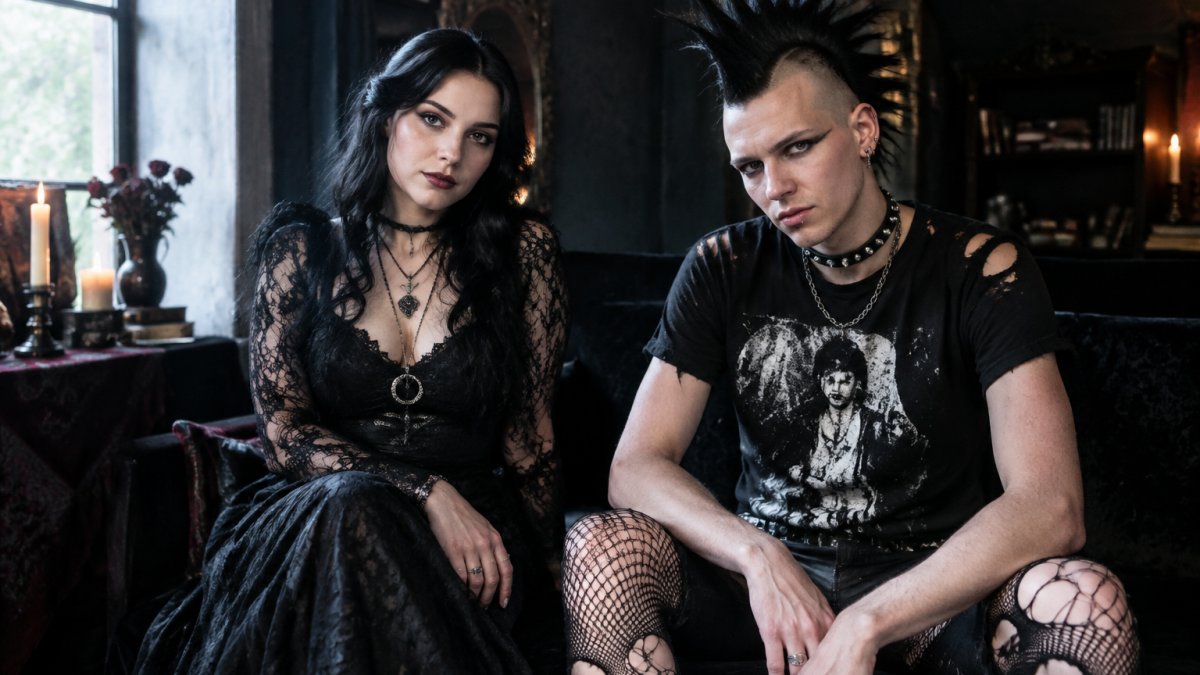
Goth fashion borrows from Victorian mourning dress, glam rock and gothic horror to build something ornate and layered. Deathrock fashion keeps the punk cut, adds ripped fishnets, band shirts and horror motifs, and tops it with a deathhawk.
The Comparison Table: Clothing, Hair, Makeup and Accessories
| Element | Goth | Deathrock |
|---|---|---|
| Clothing | Velvet, lace, layered skirts, tailored black | Ripped band tees, distressed denim, torn fishnets |
| Silhouette | Long, flowing, romantic | Cropped, fitted, punk-cut |
| Hair | Backcombed and teased, or sleek and dark | Deathhawk, spiked, shaved sides |
| Makeup | Dramatic eyes, defined lips, pale base | Heavier, smudged, horror-inspired |
| Accessories | Rosaries, brooches, ornate jewellery | Studs, patches, band pins, safety pins |
| Mood | Theatrical and romantic | Gritty and confrontational |
The table covers most of it. The history explains why the two looks split, and that history is the fastest way to tell them apart in a crowd.
Where Goth and Deathrock Come From
Both styles trace back to punk, but they took different exits. Goth rock grew in the late 1970s and early 1980s, with British bands building a dark, atmospheric sound and a theatrical visual identity to match.
That difference explains the fashion. British goth borrowed from glam rock, Victorian imagery and gothic literature, which is where the velvet, lace and romantic styling come from.
After learning that history, a reader can shop Southern Death Cult-inspired pins that reference the 1980s scene directly.
Trad Goth Style: Romantic, Theatrical and Layered
Trad goth style is the romantic, theatrical branch: long black layers, lace, velvet, and jewellery that looks inherited rather than bought.
Build a trad goth outfit from these pieces:
- A base layer in black, ideally a long-sleeve top or a fitted dress with a modest neckline.
- A textured mid-layer in lace, velvet or crushed fabric, worn open or belted.
- A long skirt or wide trousers that move when you walk.
- Layered jewellery, including a rosary or an ornate brooch at the collar.
- Boots with a solid sole, because the look is meant to be walked in.
The layering is the point. Victorian mourning dress shows up in the high collars, covered arms and the sense that every piece was chosen rather than thrown on.
Deathrock Outfit Ideas: Gritty, Tattered and Horror-Led
Deathrock outfit ideas start with damage: ripped shirts, torn fishnets, scuffed boots and patches that look earned.
Try these combinations:
- A band tee with the sleeves cut off, worn over a long-sleeve mesh top
- Distressed black jeans with a chain belt and a studded belt stacked together
- Torn fishnets under shorts, with boots laced high
The horror motifs matter here. To lean into the 1980s roots, a Death Cult-inspired pin set finishes a patched jacket without pushing it into costume territory.
Watch out: distressing is easy to overdo. One torn piece per outfit reads as intentional; three reads as a fancy-dress attempt.
Goth Makeup and Deathrock Hair: The Details That Separate Them
Goth makeup and deathrock hair are where the two styles diverge fastest. Goth makeup is controlled: a pale base, a defined dark eye, a shaped lip, everything placed with intent. Deathrock makeup is looser and heavier, with smudged liner and a look that suggests the night went on longer than planned.
Hair follows the same logic. Goth hair is backcombed and teased into volume, or worn sleek and long, with the shape kept deliberate. Deathrock hair is built around the deathhawk: shaved sides, a strip of spiked or teased hair down the centre.
Goth makeup, step by step
A trad goth face is built in layers, and the order matters more than the products:
- Base. A pale foundation or light powder, set with translucent powder so the dark eye and lip have something to sit against. A matte finish reads more goth than a dewy one.
- Eyes. A dark shadow over the whole lid, blended toward the brow, then a liner extending past the outer corner. Black kohl on the waterline is common; a sharp wing is optional but reads more theatrical.
- Brows. Defined and dark, filled with powder or drawn with a pencil. Thin, arched brows belong to the romantic end; fuller brows suit the modern trad look.
- Lips. A deep red, plum or black, lined first so the shape stays crisp. A defined lip is the goth signature; smudging it moves you toward deathrock.
- Contour and highlight. A cool-toned contour under the cheekbone and a light highlight on the brow bone. Keep it subtle; the point is a sculpted face, not a costume mask.
Deathrock makeup, step by step
The deathrock face keeps the pale base but loosens everything above it:
- Base. Pale, but often less carefully set. A slightly uneven finish is part of the look.
- Eyes. Heavy black shadow, smudged liner, and often a dark circle shaded under the eye to suggest exhaustion or horror. B-movie horror is the reference, not Victorian portraiture.
- Brows. Dark and often drawn heavier or angled, sometimes with a shaved or partially shaved tail.
- Lips. Dark, but frequently smudged or worn off-centre. A bitten or blurred lip reads more deathrock than a precise one.
- Extras. Fake blood, drawn stitches, or smudged red around the mouth for horror effect. Optional, and best kept to one element per look.
Hair: deathhawk versus goth volume
The deathhawk is a specific construction, not just spiked hair. The sides are shaved or clipped short, and the centre strip is backcombed, sprayed and pinned or gelled into spikes.
Goth hair is more varied. Backcombed volume with a centre part, a long sleek fall, or a short textured crop all read goth. The unifying rule is deliberate shape: goth hair looks styled, deathrock hair looks built.
Inclusive styling notes
Makeup and hair are the easiest places to adapt the look to your own face, hair type and budget:
- Curly or coily hair. Backcombing damages tight curl patterns. Build a goth look with a defined curl set and a dark eye; adapt the deathhawk with a clipped centre strip and styled coils at the sides.
- Fine or thinning hair. Volumising powder and tinted root spray do more than backcombing. A deathhawk on fine hair works better with a shorter centre strip and strong hold spray.
- Sensitive skin. Patch-test black kohl and heavy foundation on the jawline first. A cream liner is often gentler than a pencil on the waterline.
If you are refining the witchy, gothic end of the spectrum rather than the punk end, a pair of Rozz Williams-inspired deluxe earrings adds the finishing detail without tipping the whole outfit toward deathrock.
How to Mix Goth and Deathrock Without Looking Costumed
Mixing the two styles works best when you pick one as the base and use the other for accents. A full goth silhouette with a deathhawk reads as deliberate. A full deathrock outfit with a lace collar reads as confused. Pick your base first, then add no more than two pieces from the other side.
Outfit formulas that blend the two
These are starting points, not rules. Swap pieces to suit your body, budget and comfort.
- Goth base, deathrock accent. Long lace dress, layered necklaces, then a studded belt and scuffed boots. The lace carries the goth read; the belt and boots stop it looking precious.
- Deathrock base, goth accent. Ripped band tee and torn fishnets, then a velvet jacket and a single ornate brooch. Keep the jewellery to one piece so it does not fight the band tee.
- Neutral base, both accents. Plain black trousers and shirt, then a band pin set and a rosary. The safest first blend because the base does not commit either way.
Adapting the blend to your body, budget and comfort
- Body type. The goth base works at any size: a long skirt and textured layer skim rather than cling. For a fitted silhouette, a deathrock base with a goth jacket gives structure without volume.
- Budget. Secondhand is the obvious route for both styles. Charity shops and online resale carry velvet jackets, band tees and boots at a fraction of new prices. One studded belt and one rosary can carry several outfits.
- DIY. Distressing is cheap: a cheese grater or sandpaper on denim, scissors on a tee hem, a needle and thread for patches. Practise on a garment you do not mind losing first.
Affiliation versus aesthetic
The rule that keeps it from looking costumed is restraint. Subcultural identity comes from how you wear the clothes, not from how many references you stack on one outfit. Wearing the aesthetic is fine; claiming an affiliation you do not have is where it gets awkward. Fashion is the door, not the membership card.
Care and upkeep
Distressed and layered clothing needs more care than a plain wardrobe:
- Fishnets and mesh. Wash in a laundry bag on a cool cycle, or hand wash. They snag on zips and hooks, so keep them separate.
- Velvet. Brush rather than wash where possible; steam rather than iron. A velvet jacket stored on a padded hanger keeps its shape.
- Patches and pins. Remove pins before washing a patched jacket. Sew patches rather than iron them on if you want them to survive repeated wear.
Start with one crossover piece, wear it with what you already own, and let the wardrobe tell you which direction it wants to go.
Accessories That Work for Both Styles
Accessories are the cheapest way to move between the two looks, and several pieces genuinely belong to both. Band pins, rosaries, studded belts and boots all cross over without anyone questioning which side you are on.
Our picks for crossover pieces:
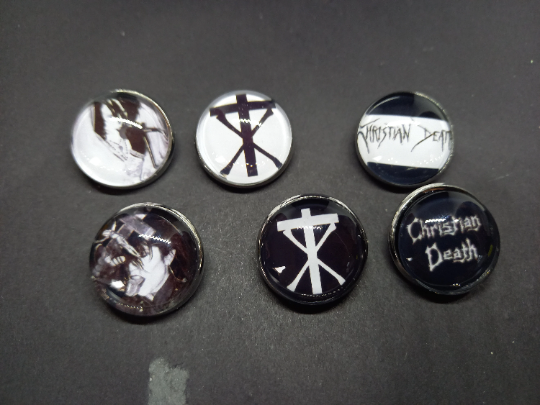
- Band and logo pins. Small, cheap and easy to swap. A Rozz Williams Christian Death-inspired pin badge sits equally well on a velvet jacket or a patched denim vest.
- Deluxe earrings with chain detail. Ornate enough for goth, dark enough for deathrock. The Old School Rozz Williams Christian Death-inspired deluxe earrings come in pairs in a hessian gift bag at £12.50, with hypoallergenic hoops and an inverted pentagram charm.
- Rosaries and layered chains. Worn long over a plain black layer, they read goth; worn short over a band tee, they read deathrock.
The pin badges in our range measure approximately 22mm, use a zinc alloy finding with a glass dome, and are water resistant but not waterproof, so remove them before bathing or washing the garment.
Finding Your Next Piece at The Deviant Angel Emporium
The fastest way to settle goth vs deathrock for your own wardrobe is to start with one piece that works in both and build outward.
At The Deviant Angel Emporium, we stock gothic jewellery, band-inspired pins and earrings, occult-inspired accessories and dark homeware, including Alchemy Gothic pieces and taxidermy and bone art.
The gap between goth and deathrock is smaller than the internet makes it look, and the pieces that bridge it are the ones worth owning first.
Frequently Asked Questions
What is the difference between goth and deathrock fashion?
Goth fashion leans romantic and theatrical: velvet, lace, corsetry, layered black clothing and dramatic makeup. Deathrock fashion sits closer to punk, with ripped and distressed clothing, band patches, fishnets and horror motifs. The two share a dark colour palette and a DIY attitude, but goth reads as ornate and deathrock reads as raw. In practice, many people wear a blend of both, and the boundary is more about attitude and music than a strict dress code.
Is deathrock a type of goth?
Deathrock is generally treated as a sibling of goth rather than a subcategory. It grew out of the late 1970s and early 1980s American punk scene and is often described as the side of goth closest to punk, with more horror influence and less romanticism. The music scenes overlap heavily, and fans move between them, but deathrock keeps its own visual identity built on distressed layers, dark makeup and the deathhawk hairstyle.
What does a deathrock outfit look like?
A deathrock outfit typically pairs ripped black jeans or a distressed skirt with a band tee, fishnets and heavy boots. Layering is key: torn sleeves, safety pins, studded belts and patches all add texture. Horror motifs, skull prints and DIY alterations are common. For finishing touches, a pin badge set or chained earrings add the right level of detail without pushing the look into costume territory.
Can you mix goth and deathrock styles?
Yes, and plenty of people do. A practical approach is to pick one anchor piece and build around it: a lace dress styled with a distressed denim jacket and studded boots, or a band tee paired with a velvet skirt and dramatic goth makeup. Keep the colour palette consistent, usually black with one accent, and let one element carry the horror or DIY edge so the outfit stays cohesive rather than cluttered.
How do deathrock hair and makeup differ from trad goth?
Trad goth style usually means backcombed, voluminous hair and makeup built around precise black eyeliner, defined brows and dark lips. Deathrock hair is more overtly punk: the deathhawk, a teased and sprayed faux-hawk, is the signature look. Deathrock makeup tends to be messier and more horror-inflected, with smudged shadow and a paler base. Both rely on black, but goth aims for polished drama while deathrock aims for grit.
