
Witchcore Aesthetic Home Decor Ideas for 2026
Table of Contents
- The Witchcore Aesthetic Home Decor Ideas Framework
- Mood Lighting and Witchy Bedroom Ideas
- Wall Decor, Tapestries, and Botanical Accents
- Practical How to Style a Witchy Altar
- Crystals, Celestial Displays, and Magical Objects
- Curating Gothic Home Decor Accessories
- Sustainable and Small Space Witchcore Solutions
- Conclusion
- Frequently Asked Questions
Last Updated: September 7, 2026
The Witchcore Aesthetic Home Decor Ideas Framework
Witchcore aesthetic home decor ideas are transforming how we think about interior design, blending mystical symbolism with deeply personal sanctuary-building. This style is less about following trends and more about curating spaces that feel genuinely sacred to you. The framework rests on layering textures, shadow, and meaningful objects rather than matching furniture sets or following rigid colour palettes.
The core tension most guides miss is this: witchcore fails when it becomes a shopping list of clichés. A cauldron and a broomstick do not make a space magical. What actually works is building atmosphere through intentional layers, where every piece carries personal or esoteric weight. This aesthetic borrows from dark academia, gothic, and bohemian traditions, but its strength lies in how you blend them into a coherent whole.
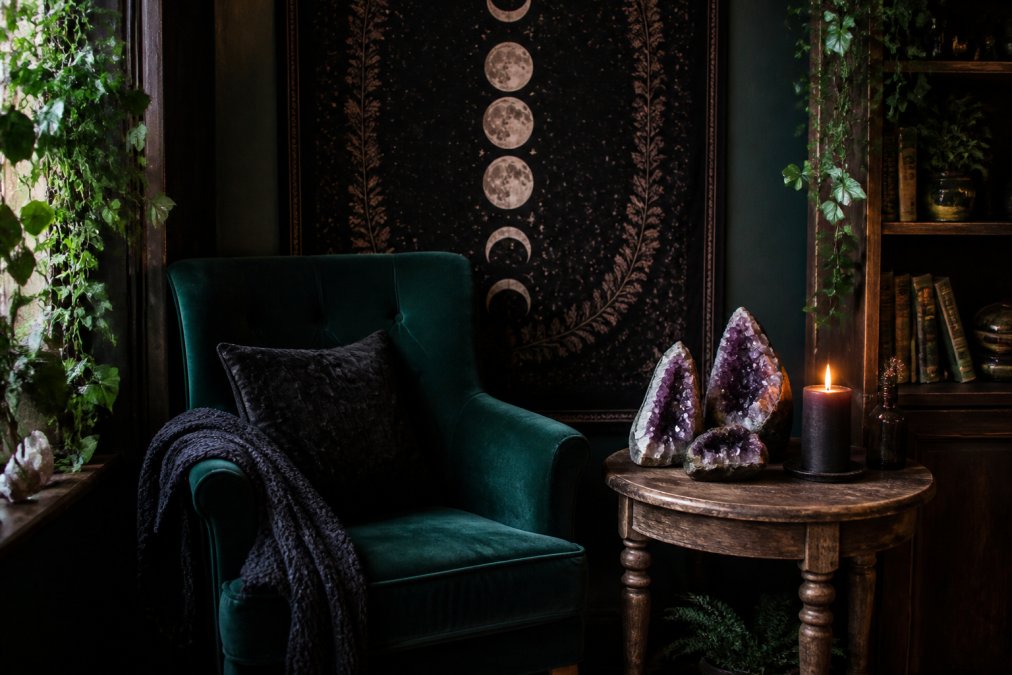
Essential Witchcore Decor Elements
To build a foundation, focus on these witchy bedroom ideas and living space staples: rich velvet textiles, aged brass or pewter candle sconces, and natural materials like driftwood and unpolished stone. Texture does the heavy lifting here. Combine rough hessian with smooth velvet and cool metal to create the visual depth this style demands.
Start with your colour story. Deep greens, burgundies, charcoal, and midnight blues form the backdrop, punctuated by candlelight gold and bone white. Choose one dominant shade per room to avoid the space feeling chaotic. A useful rule is the 60-30-10 split: 60% dark base colour, 30% textured neutrals, and 10% metallic and crystal accents (architecturaldigest.com).
Mood Lighting and Witchy Bedroom Ideas
Lighting is the single most important element in a witchcore space, and it is where most attempts fall flat. Harsh overhead light destroys the mood instantly. Replace it with multiple low-level sources: candles in vintage holders, salt lamps, and string lights with warm amber bulbs. Dimmable wall sconces create shadows that make the room feel alive and shifting.
For a truly cohesive witchy bedroom, drape sheer dark fabric over bed canopies and place candles at varying heights on shelves and window ledges. The goal is layered pools of light rather than uniform illumination. Consider blackout curtains in deep plum or forest green to control the ambient light completely during the day, allowing you to set the mood regardless of the weather outside.
Wall Decor, Tapestries, and Botanical Accents
Walls are your largest canvas, and they deserve more than a single poster. A large moon phase or celestial tapestry anchors the room and provides instant witchy aesthetic depth. Layer it with ornate framed botanical prints and vintage anatomical drawings for a curated, gallery-style look. Mixing frame styles, from baroque gold to distressed black wood, adds to the collected-over-time feel.
Dried flowers and herbarium specimens bring the nature-inspired element indoors. Hang bundles of lavender, sage, and eucalyptus upside down to dry, then arrange them in apothecary jars or wire them into wall displays. These botanical accents connect the space to the natural cycles that sit at the heart of the aesthetic.
Practical How to Style a Witchy Altar
A witchy altar is a dedicated surface for reflection, meditation, or intention-setting, and styling one is more straightforward than most think. Choose a stable surface like a wooden sideboard, a repurposed trunk, or a corner shelf. Clear it of clutter and dedicate it solely to this purpose. The altar becomes the visual and energetic focal point of your space.
Begin with a cloth in a colour that resonates with your intention, then build in layers. Place a central object, such as a large crystal, a statue, or a candle, as the anchor. Surround it with symmetrical pairs of smaller items: two candle sconces, two small bowls for offerings, and your tarot cards or zodiac-themed pieces. Height variation matters, so use stacked books or small risers to lift objects.
Crystals, Celestial Displays, and Magical Objects
Crystals and celestial motifs are the visual shorthand of witchcore, but their power fades if they are simply scattered on shelves like ornaments. The difference between a cluttered collection and a curated display lies in how you group, light, and rotate these objects. More importantly, the witchcore aesthetic is tied to the turning year, and your displays should shift with it.
Grouping Crystals with Intent
Instead of dotting crystals across every surface, gather them into deliberate clusters. A common pattern that works well is the 'trinity cluster': three stones of varying heights arranged on a small brass tray or a slice of unpolished wood. Choose one large anchor piece, such as a geode or a tall wand, and flank it with two smaller tumbled stones. This creates a visual triangle that draws the eye and feels more intentional than random placement.
For shelves, use glass cloches or small wooden risers to vary height. A cluster of clear quartz points under a cloche reads as a specimen collection, not a trinket pile. If you work with crystals for their reputed energetic properties, keep in mind that sunlight fades amethyst and rose quartz over time, so rotate those pieces away from direct window light every few weeks (minerals.net). Selenite, which is soft and water-soluble, should be dusted with a dry cloth rather than washed.
Celestial Displays That Shift with the Seasons
A static moon phase tapestry is a fine starting point, but the most engaging witchcore spaces treat celestial decor as a living calendar. One practical approach is to keep a small chalkboard or a framed replaceable print near your altar or main display, marking the current moon phase and the nearest sabbat. This connects your decor to the actual lunar cycle rather than leaving it as a fixed backdrop.
When the seasons turn, swap out accent pieces to keep the room feeling current. For Samhain (31 October) and the darker months, lean into deep burgundy cloths, dried oak leaves, and imagery of ravens or moths. As Beltane (1 May) approaches, replace those with fresh green sprigs, pastel-toned candles, and imagery of hares or blossoms. This rotation does not require a large budget; it simply means storing a small box of seasonal accents and changing them four times a year. Most practitioners find that this practice keeps the space feeling alive rather than museum-like.
Magical Objects as Story Anchors
Magical objects such as vintage keys, ornate brooches, and apothecary bottles filled with dried botanicals add the esoteric detail that makes a space feel authentic. The key is to let each piece tell a story. A single brass key hung on a ribbon beside a framed print of a Victorian keyhole invites questions. A row of identical mass-produced trinkets does not.
When sourcing these pieces, prioritise items with visible wear or a clear provenance. A tarnished silver locket from a charity shop carries more narrative weight than a factory-new replica. If you are drawn to a particular symbol, research its history. For example, the triple moon symbol represents the maiden, mother, and crone in many modern pagan traditions, while the green man is associated with rebirth and the growing season. Understanding these meanings helps you place objects with intention rather than decoration alone.
Displaying Celestial Maps and Prints
Constellation maps and celestial prints work best when they are treated as educational artefacts, not just wall filler. Frame a vintage star chart and pair it with a small magnifying glass on a nearby shelf. Alternatively, drape a celestial-print fabric over a reading chair or use it as a bed runner. If you want a more interactive element, consider a rotating star projector that casts constellations onto the ceiling. These devices are widely available for under £30 and can transform a plain bedroom ceiling into a night sky, which is particularly effective in small spaces where wall area is limited.
Curating Gothic Home Decor Accessories
This is where the witchcore aesthetic meets true gothic home decor accessories. Focus on statement pieces that hold their own: an ornate mirror with a dark frame, a candelabra with dripping wax, or a piece of framed artwork depicting a raven or a moth. These items act as conversation starters and anchor the room's personality.
When curating, resist the urge to buy everything at once. A curated collection built over time feels more authentic than a room furnished in a weekend. Prioritise pieces that resonate with you personally rather than items chosen purely for their visual impact. For those seeking distinctive, high-quality pieces, The Deviant Angel Emporium offers a curated range of gothic homeware, occult-inspired accessories, and artistic decor designed to help you stand apart from the mainstream.
Sustainable and Small Space Witchcore Solutions
Witchcore does not require a sprawling Victorian house, and it does not demand a large budget. Small space solutions are about maximising verticality and choosing multifunctional pieces. Use tall, narrow shelving units to display crystals and candles. Hang tapestries to create the illusion of separate zones in a studio apartment. A windowsill can become a micro-altar.
Sustainable witchcore is also deeply aligned with the aesthetic's nature-focused ethos. Thrift stores and flea markets are goldmines for vintage candle holders, brass trays, and ornate frames. Repurposing found objects, such as turning an old mirror into a spirit board or a branch into a crystal display stand, adds unique character while reducing waste. This approach aligns with the broader cultural shift toward conscious consumption noted by sustainability researchers at the University of Oxford, who highlight the environmental benefits of extending product lifecycles.
Conclusion
Building a witchcore space is a gradual process of layering light, texture, and meaningful objects into a personal sanctuary. The most successful rooms feel collected, not purchased, and they reflect the individual's unique path through the aesthetic. For those seeking distinctive, high-quality pieces to complete their vision, The Deviant Angel Emporium offers a curated range of gothic homeware, occult-inspired accessories, and artistic decor designed to help you stand apart from the mainstream. Search our collection and begin curating a home that truly reflects your inner world.
Frequently Asked Questions
How do I make my house look witchy on a budget?
Start with thrifted finds and DIY projects. Paint glass jars to create apothecary bottles, collect dried flowers and branches for rustic displays, and use battery-operated candles for safe ambient lighting. Focus on a few high-impact areas, like a single wall with a tapestry or a dedicated altar shelf, rather than trying to fill every room at once.
What is the difference between witchcore and gothic home decor?
While they share a dark, moody palette, witchcore leans into nature, mysticism, and ritual. Think botanical prints, crystals, herbs, and celestial motifs. Gothic decor is more architectural and ornate, focusing on dark wood, wrought iron, and dramatic, sometimes macabre, statement pieces. Witchcore feels earthy and ethereal, whereas gothic feels more formal and dramatic.
What are the essential elements of a witchy altar?
A witchy altar is a personal sacred space. Begin with a dedicated surface, like a wooden table or shelf. Add representations of the four elements: a candle for fire, a bowl of water, crystals or stones for earth, and incense or a feather for air. Include items of personal significance, such as tarot cards, dried herbs, or zodiac symbols, to make the space truly yours.
Where can I source authentic gothic and witchy homeware in the UK?
Look for specialist alternative retailers like The Deviant Angel Emporium, which curate exclusive collections from brands like Alchemy Gothic and Nemesis Now. For unique finds, explore local charity shops, flea markets, and antique centres for vintage frames, brass candlesticks, and glass bottles you can repurpose. This mix of new and thrifted items creates an authentic, layered look.
The challenge of creating a witchcore home is resisting the urge to replicate someone else's perfectly styled room. Your space should evolve with you, blending found objects, personal symbols, and quality statement pieces. The Deviant Angel Emporium supports that journey with exclusive, handcrafted decor and accessories that prioritise uniqueness and craftsmanship. Get started with The Deviant Angel Emporium and build a sanctuary that is unmistakably yours.