
Are Unique Gothic Gifts for Collectors Worth It?
Last Updated: November 12, 2026
Quick Summary
Unique gothic gifts for collectors are worth it because they offer provenance, handwork and scarcity that mass-market presents cannot match. Collectors value hand-sculpted detailing, honest materials and a maker who can explain how a piece was made. Our mid tier of £20 to £50 delivers the most handwork per pound.
- Collectors judge quality by hand-finishing, honest materials and soldered fixings rather than packaging.
- The ram skull with sculpted sigil of Satan costs £120 and measures 29 cm long.
- The Dracula box frame at £45 mounts a bat against a page of Bram Stoker's Dracula.
- The death head moth kilt pin necklace at £28 has every connecting jump ring soldered.
- We dispatch within three working days and send small parcels on tracked 48-hour service.
Table of Contents
- Why Unique Gothic Gifts for Collectors Beat Mass-Market Presents
- How Collectors Judge Quality, Materials and Craftsmanship
- Skull and Bone Art: Statement Pieces for the Serious Collector
- Framed Oddities and Rare Gothic Collectibles That Hold Attention
- Witchcore Aesthetic Home Decor Ideas for Gifting
- Budget Tiers: Matching the Gift to What You Want to Spend
- Jewellery and Wearable Curiosities Collectors Actually Wear
- Sourcing, Shipping and Presenting a Gothic Gift Properly
- Frequently Asked Questions
Why Unique Gothic Gifts for Collectors Beat Mass-Market Presents
A collector can spot a mass-market present quickly. The same pressed-tin bat ornament, the same resin skull from the same high-street chain, the same mug with a slogan printed slightly off-centre. It gets a polite smile and then lives in a cupboard.
At The Deviant Angel Emporium, we sell to people who have already bought the obvious things. They are not short of skulls.
Below, we break down how collectors judge a piece, which categories deliver real value, and how to match a gift to a budget without guessing.
The difference comes down to three things: provenance, handwork and scarcity. A hand-sculpted sigil on a real ram skull is a different object from a moulded ornament in a gift box, even when both cost similar money.
How Collectors Judge Quality, Materials and Craftsmanship
Collectors judge quality by looking for hand-finishing, honest materials and a maker who can explain where the piece came from. Weight, texture and the neatness of the join tell you more than the packaging does.
Here is what we would check before buying for a serious collector:
- Materials named plainly. Stonecast powder, real glass, soldered jump rings, genuine taxidermy. If a listing is vague about material, assume the worst.
- Hand-finishing visible in photos. Brush marks, a painted wash, a sculpted detail that varies piece to piece. These signal one-off work.
- Fixings that hold. Soldered jump rings on jewellery, proper frame mounts on wall pieces. Glued fittings fail.
- Honest sizing. Check listed dimensions against the space you have. Measure the gap before you buy.
- A maker who answers questions. Ask how a piece was made before you buy.
For guidance on how collectible objects are described and graded, the Arts Council England guidance on collections is a useful starting point on provenance and documentation.
Watch out: the biggest mistake is buying on a single dramatic photo. Ask for a second angle, especially on taxidermy and framed work, where depth and finish rarely read well in one shot.
Skull and Bone Art: Statement Pieces for the Serious Collector
Skull and bone art is the category that separates a casual buyer from a collector. A real skull with hand-sculpted occult detailing is a centrepiece, and it anchors a shelf, an altar or a cabinet in a way that printed art cannot.
Two pieces in our range suit this purpose.
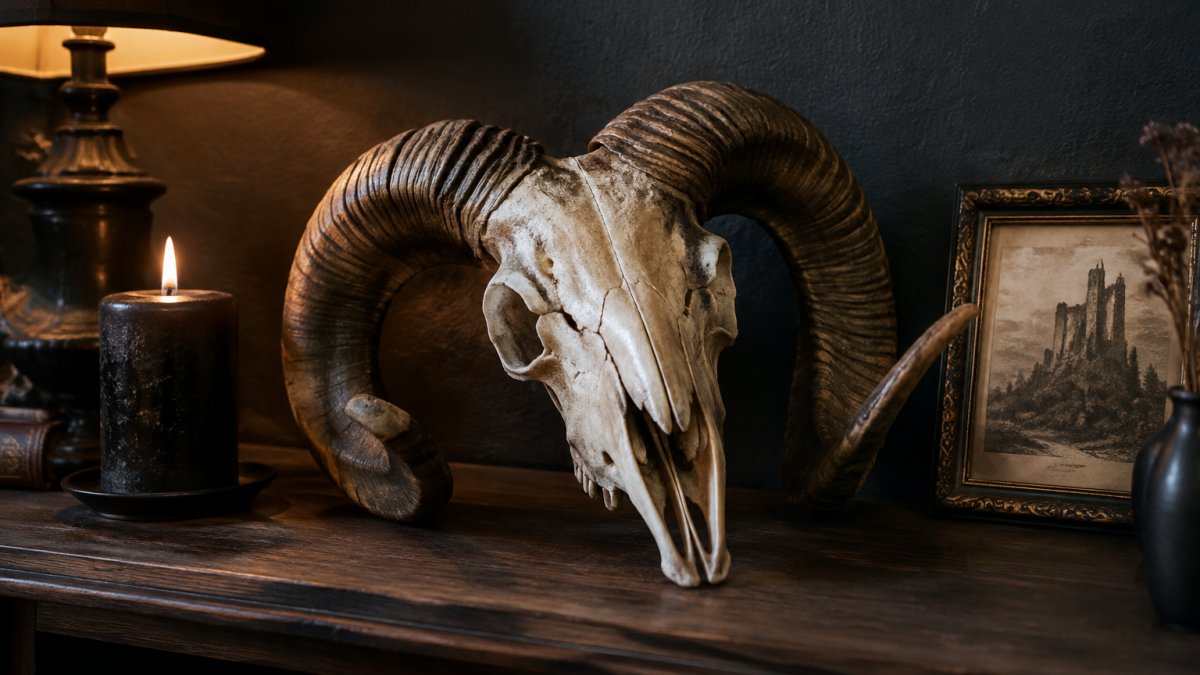
Ram Skull with Sculpted Sigil of Satan, £120
It measures 29 cm long, 17 cm high and 27 cm wide with the horns attached, and the horns ship removed for safe transit, so you reattach them on arrival. The sigil of Satan is hand sculpted and painted at the centre of the skull.
It suits an altar, a curiosity cabinet or a dedicated oddity shelf.
Goat Skull with Sculpted Inverted Cross, £100
Smaller and easier to place, this goat skull carries a deeply sculpted inverted cross and measures 19 cm long, 10 cm high and 11 cm wide. The bottom jaw ships detached and reattaches on arrival.
It suits someone building a dark altar.
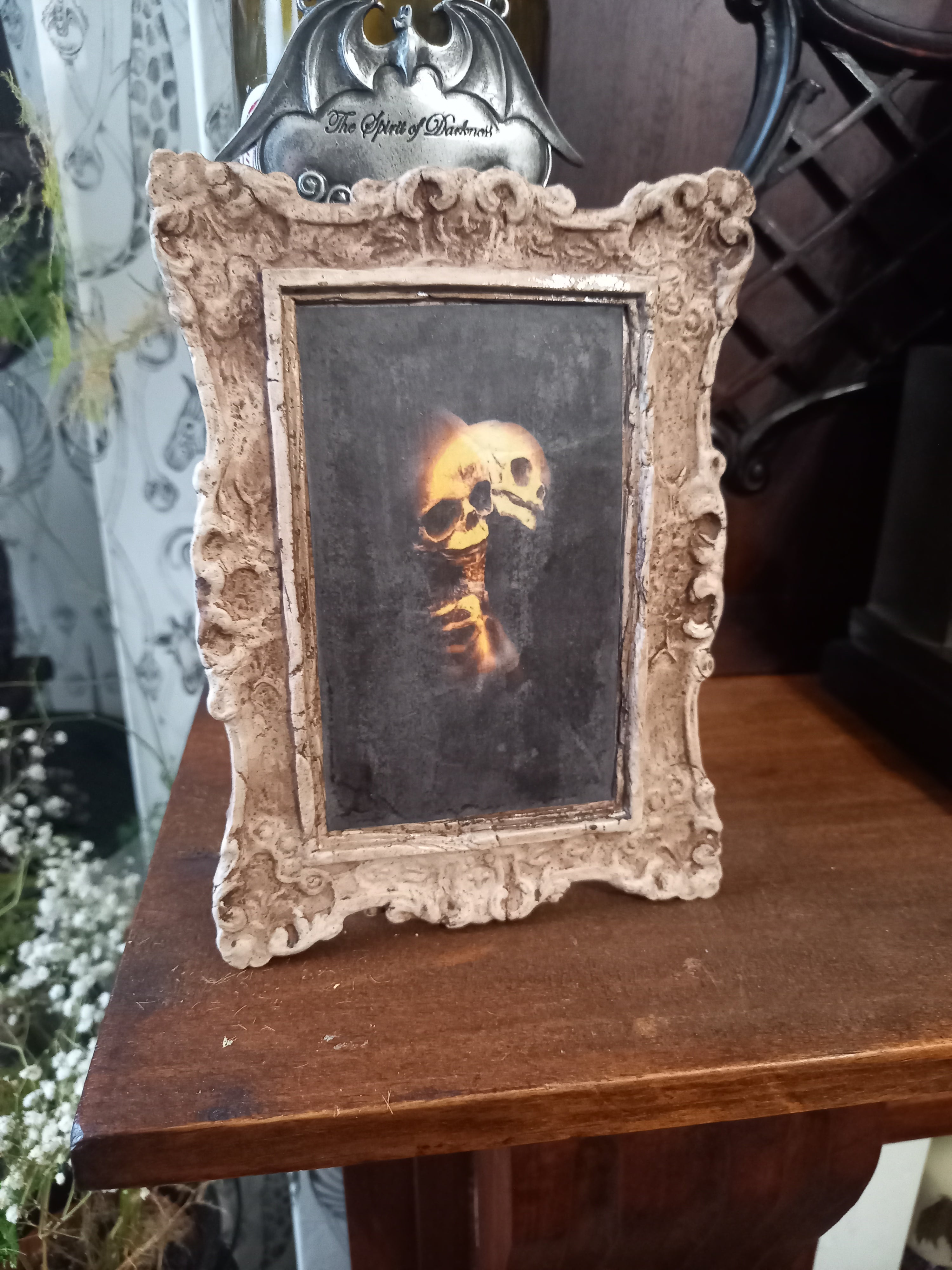
You can view the hand-sculpted conjoined twin skeleton piece if you want a smaller, framed alternative in the same bone finish.
Framed Oddities and Rare Gothic Collectibles That Hold Attention
Framed oddities are the safest entry point into rare gothic collectibles, because they arrive ready to hang or stand, need no assembly, and read clearly in a photograph. They also make the best gifts for someone whose taste you only half know.
Our framed bat pieces show how much variation the format allows. The Dracula box frame, at £45, measures 28.5 cm by 23 cm and 6 cm deep, with a 9 cm by 2.5 cm bat mounted against the first page of Bram Stoker's Dracula. It hangs or stands freely. The bat skeleton frame, at £75, uses an anatomical illustration background with the skeleton mounted to the lower right, and it works particularly well as an altar piece.
If provenance matters to your recipient, ask before you buy.
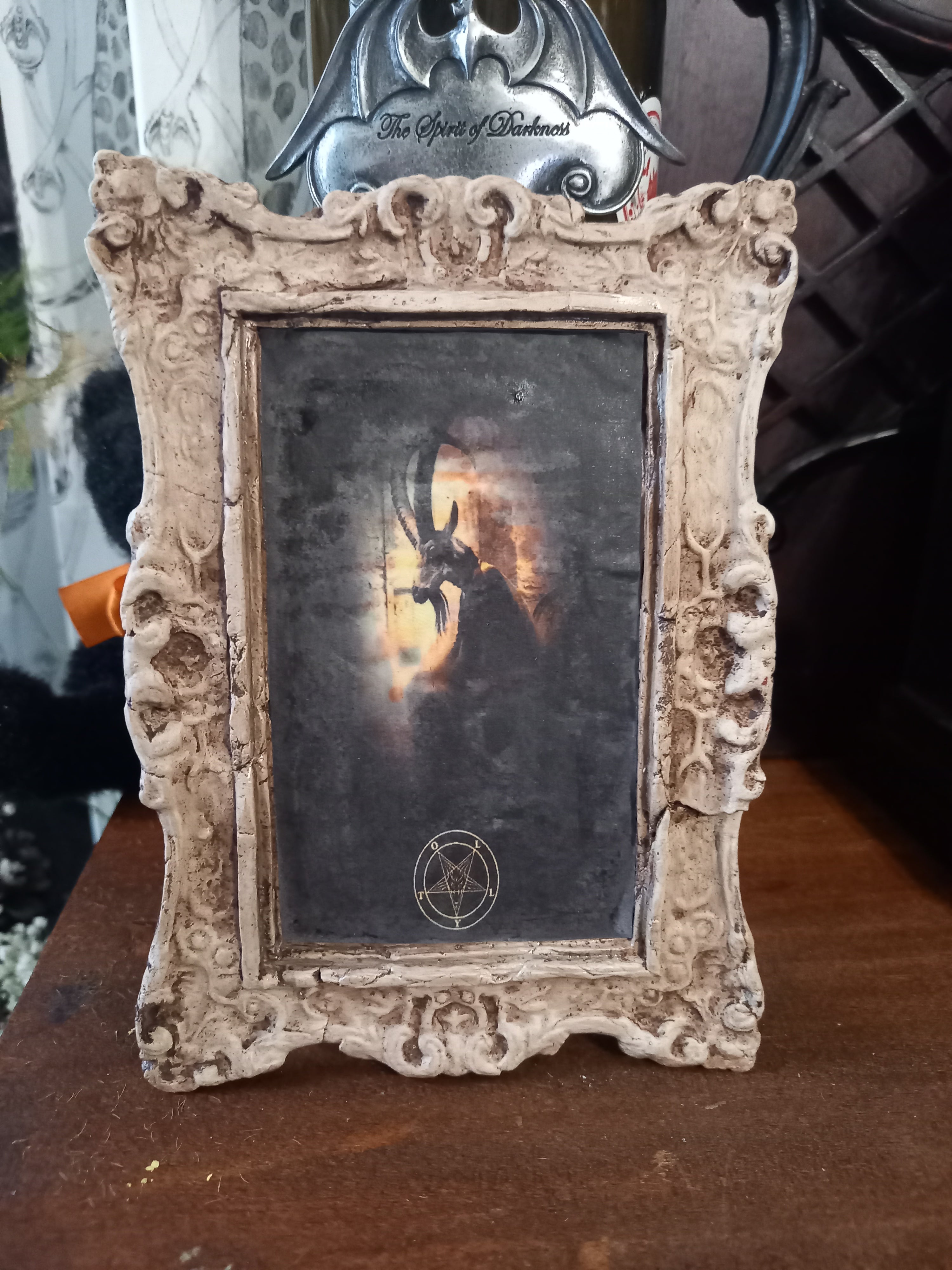
For a lower-priced framed piece, the Baphomet sepia image in a cast ornate frame at £15 is a hand-finished one-off that suits a wall behind an altar.
Witchcore Aesthetic Home Decor Ideas for Gifting
Witchcore gifting works best when you buy one strong object rather than a scatter of small themed items. A single apothecary bottle or a framed curiosity does more for a room than five novelty pieces.
The Vampire Blood apothecary bottle, at £18, is the clearest example. It stands 23 cm tall with an 8 cm diameter, holds 0.5 litres, and comes empty with a bat rosary detail and a custom label.
For readers building a wider scheme, our witchcore aesthetic home decor ideas for 2026 article covers how to layer candles, moths and framed curiosities without the room tipping into clutter.
Other witchy curiosities worth considering: the death head moth kilt pin brooch at £6.50, and the china doll head with exposed brain at £35.
Budget Tiers: Matching the Gift to What You Want to Spend
Budget tiers only help if they are tied to what a collector actually gets for the money.
| Budget | What it buys | Example pieces | Collector value | Best for |
|---|---|---|---|---|
| Under £20 | Small framed art, apothecary, brooches | Baphomet frame £15, Vampire Blood bottle £18, moth brooch £6.50 | Entry-level pieces that let a recipient try a style without committing shelf space or budget; best treated as accents rather than anchors | Stocking fillers, first gothic gift, adding to an existing display |
| £20 to £50 | Framed taxidermy, statement jewellery | Dracula bat frame £45, moth necklace £28, doll head £35 | The strongest value band for handwork: framed taxidermy and soldered jewellery at this price give a collector something with visible craft and a maker's hand | Housewarmings, birthdays, recipients who already own small curiosities |
| £75 to £120 | Bone art, larger framed taxidermy | Bat skeleton frame £75, goat skull £100, ram skull £120 | The centrepiece tier: real bone, hand-sculpted detailing and pieces large enough to anchor a shelf, altar or cabinet | Serious collectors, milestone gifts, recipients building a dedicated display |
A common pattern among collectors is that the mid tier (£20 to £50) delivers the most handwork per pound.
If you are weighing the mid tier, the framed gothic art piece sits alongside the £100 to £120 skulls as a way to give something substantial without going to the top of the range.
Best for: buyers who want maximum presence per pound, which in our view is the £15 to £45 band. Skip if: the recipient already owns several framed pieces and is looking for a centrepiece.
Watch out: a low price does not automatically mean low quality, but it does usually mean a smaller object. Check the listed dimensions against the recipient's shelf before assuming a £15 frame will read as a gift on its own.
Prices of gothic gift pieces
Jewellery and Wearable Curiosities Collectors Actually Wear
Wearable curiosities succeed or fail on construction, not design. A gothic necklace that loses a moth charm in a week is worse than no gift at all, so check the fixings before anything else.
The death head moth kilt pin necklace, at £28, is built from two kilt pins joined by a central O-ring, with every connecting jump ring soldered. The curb chain adjusts from 37 cm to 58 cm, and you can request a specific length through the personalisation option, which also avoids leftover chain. It arrives with a gift bag and branded packaging.
At the other end of the scale, the matching kilt pin brooch costs £6.50 and comes in a hessian gift bag, which makes it an easy add-on.
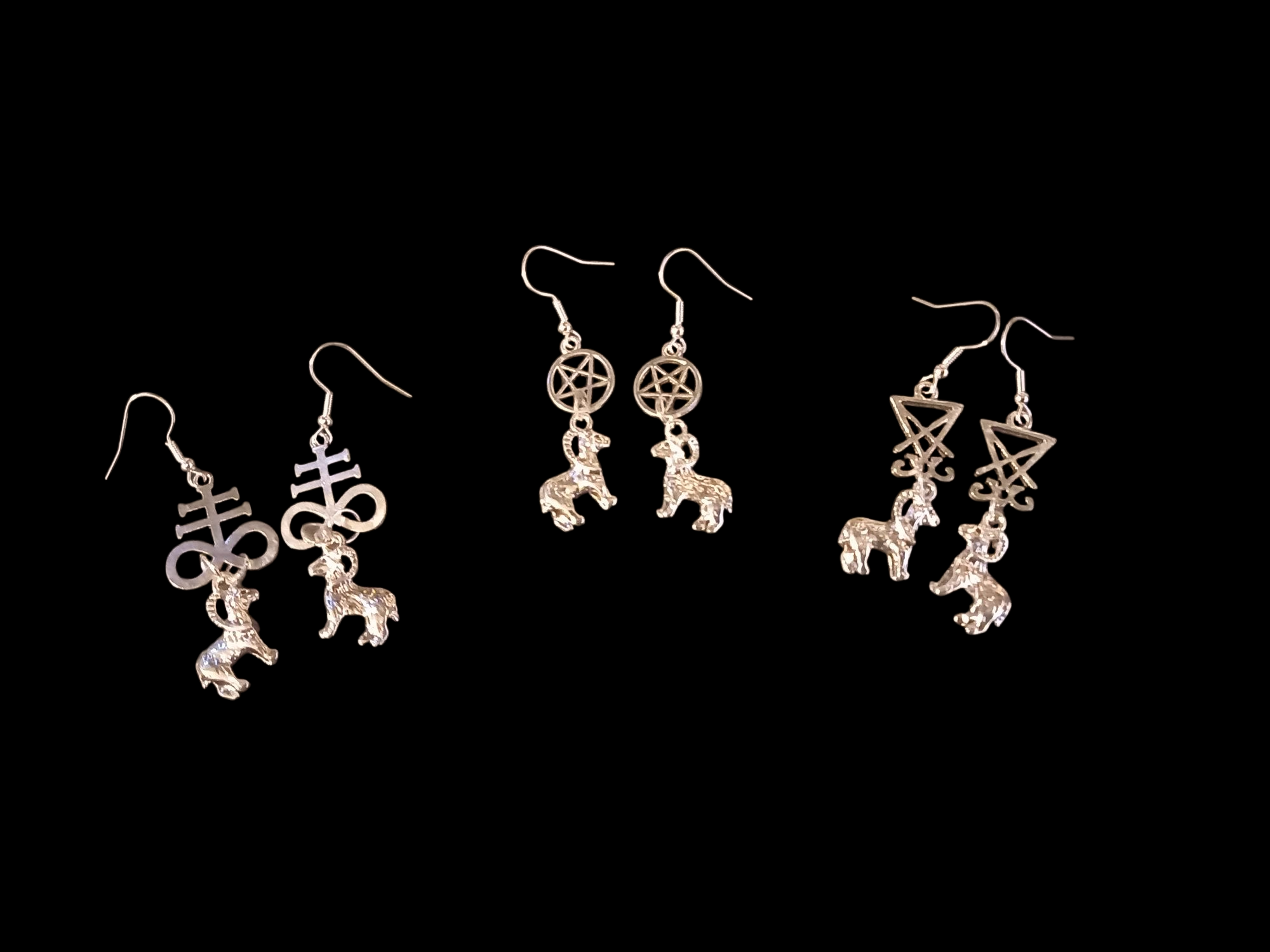
For a recipient who wants something to actually wear out, the occult earrings with goat charms are a bolder option than a pendant.
Sourcing, Shipping and Presenting a Gothic Gift Properly
Sourcing and presentation decide whether a good piece lands well. Buy from a maker who states materials, ships tracked and answers questions before you pay. For collectors, the practical questions, where a piece comes from, how it travels, what happens if it arrives damaged, matter as much as the object itself.
On sourcing, ask three things before buying: whether the maker states materials plainly (stonecast powder, real glass, soldered jump rings, genuine taxidermy), whether they can explain how the piece was made, and whether they will confirm provenance for taxidermy or bone. A maker who answers those questions is usually a maker worth buying from. If a listing is vague about material or origin, assume the worst.
Our own process, so you know what to expect: we dispatch within three working days of purchase and send small parcels on a fully tracked 48-hour service. International shipping is quoted on request. Buying three items together earns a discount at checkout with combined shipping, which suits anyone assembling a gift set. For time-sensitive gifts, order at least a week before you need the piece, because framed taxidermy and skulls are packed by hand and cannot be rushed.
Presentation tips that cost nothing:
- Keep the original packaging and gift bag, and wrap taxidermy in its frame rather than loose.
- Include a short note on what the piece is and how it was made. Collectors keep this.
- For skull pieces, reattach horns or jaws before wrapping, or include the fittings in an envelope.
- Check the recipient's wall or shelf space against the listed dimensions first.
Watch out: the one thing that catches buyers out is ordering a large framed piece for a recipient in a small flat. A 28.5 cm frame is fine on a shelf, awkward on a crowded wall.
Collecting gothic art rewards patience and a good maker. If you want pieces with hand-finishing, honest materials and a story behind them, we can help. The Deviant Angel Emporium stocks hand-sculpted bone art, ethically sourced framed taxidermy and soldered wearable curiosities, with tracked UK delivery and a combined-shipping discount when you buy three items.
Frequently Asked Questions
What makes a gothic gift unique enough for a serious collector?
Collectors look for pieces that are not repeated across every alternative shop: hand-sculpted details, one-of-a-kind frames, and finishes applied by hand rather than printed. A ram skull with a hand-sculpted sigil, or a framed bat skeleton with an anatomical illustration background, gives them something no one else on their shelf owns. Rarity, craftsmanship and a clear story behind the piece matter more than the price tag.
Are there specific gothic homeware items that hold value for collectors?
Framed taxidermy and bone art tend to hold interest because they are display pieces rather than consumables. The Dracula bat box frame at £45 and the bat skeleton frame at £75 both work as wall or shelf centrepieces, and each is a single piece rather than a mass-produced run. Rare gothic collectibles like these keep their appeal because the buyer is collecting a specific object, not a trend.
How do I choose a high-quality gothic gift for a collector on a budget?
Start with the smaller handcrafted pieces. The death head moth kilt pin brooch is £6.50, the Baphomet sepia frame is £15, and the conjoined twin skeleton frame is £15, so you can give something genuinely handmade without spending much. The Vampire Blood apothecary bottle at £18 sits in the middle. Buying three items also triggers a discount at checkout with combined shipping.
How are taxidermy and bone art pieces shipped and looked after?
Skulls are dispatched within three working days with horns or jaws removed for transit, sent by tracked 48-hour service. Framed oddities can be hung or stood freestanding.
